

Sustainable weight loss is rarely about willpower alone.
Most weight-loss programs promise structure, motivation and results.
And many of them do work at the beginning.
The scale moves. Clothes feel looser. Energy may improve. There is a sense of control again.
But for many people, the same pattern returns a few weeks or months later.
Life gets busy. Stress increases. Sleep becomes irregular. Travel, hormones, emotions or family routines take over. The plan becomes harder to follow, and slowly, the kilos starts coming back.
This is often when people blame themselves.
They think they lacked discipline.
But in many cases, the problem is not the person. It is the system.
Most weight-loss programs fail because they focus too much on short-term control and not enough on the deeper foundations of sustainable weight-loss: metabolism, gut health, inflammation, stress, hormones, sleep and realistic habits.

Why most weight-loss programs fail
Many traditional weight-loss programs are built around restriction.
They usually ask people to eat less, avoid more foods, exercise harder and stay motivated.
This can create fast results, but it often ignores what the body needs to feel safe, nourished and balanced.
A program may fail when it:
- Cuts calories too aggressively
- Removes too many foods at once
- Ignores stress and emotional eating
- Does not support gut health
- Does not address inflammation
- Pushes exercise without recovery
- Offers no maintenance plan
- Ends before habits are truly built
Weight-loss is not just about eating less.
It is about creating a body environment where losing weight becomes easier and maintaining results becomes realistic.

The real reason people struggle to maintain results
Weight-regain is very common after strict dieting.
This is not only because people “go back to old habits.”
It can also happen because the body has adapted to restriction.
When food intake is too low for too long, the body may respond with:
- More hunger
- Stronger cravings
- Lower energy
- Poorer sleep
- Less motivation to exercise
- Slower metabolism
- Greater food obsession
This is why harsh diets often create the exact cycle they are trying to fix.
The body may lose some kilos quickly at first, but it does not feel supported enough to maintain the result.
Long term weight-loss needs a different approach.

Why stress makes weight-loss harder
Stress is one of the most underestimated factors in weight-loss.
When stress is high, the body releases more cortisol. Cortisol is useful in short bursts, but when it stays elevated for too long, it can affect appetite, sleep, digestion, cravings and inflammation.
Many people notice that during stressful periods they:
- Crave more sugar or refined carbohydrates
- Snack more often
- Feel tired but wired
- Sleep less deeply
- Store more fat around the belly
- Feel less motivated to cook or exercise
This is why stress management is not a “bonus.”
It is part of the weight-loss foundation.
Walking, breathing, yoga, rest, slower meals and better sleep rhythms can all help the body move out of survival mode.
Gut health and inflammation matter
Gut health plays an important role in digestion, cravings, energy and inflammation.
When the gut is imbalanced, people may experience bloating, constipation, fatigue, cravings, skin issues, brain fog or poor food tolerance.
This can make weight-loss harder because the body is not only dealing with food intake. It is also dealing with irritation, poor digestion and inflammatory signals.

An anti-inflammatory approach can help by focusing on:
- Whole foods
- Colorful vegetables
- Enough protein
- Healthy fats
- Fiber
- Herbs and spices
- Fermented foods when tolerated
- Less refined sugar
- Less ultra-processed food
This does not mean eating perfectly.
It means reducing the daily load on the body and giving it more of what it needs to repair, digest and function better.
Exercise alone is not enough
Exercise is important for health, metabolism, muscle, mood and healthy aging.
But exercise alone rarely fixes the full weight-loss picture.
If someone is sleeping poorly, eating too little protein, living under chronic stress and struggling with cravings, adding more exercise may not be enough.
In some cases, it can even increase fatigue if recovery is poor.
The most effective exercise plan is usually realistic and repeatable.

Helpful options include:
- Walking after meals
- Strength training 2 to 3 times per week
- Gentle yoga
- Mobility work
- Daily movement
- Stretching and breathwork
Movement should help the body feel stronger, calmer and more energized.
It should not feel like punishment.
Blood sugar balance is often the missing piece
Many people trying to lose weight spend years focusing on calories but forget blood sugar balance.
When meals are too low in protein, fiber or healthy fats, blood sugar can rise and drop quickly. This can lead to cravings, mood changes, hunger and low energy.
A more balanced meal usually includes:
- Protein
- Fiber
- Healthy fats
This simple structure can help reduce cravings, support satiety and make it easier to lose some kilos without feeling constantly deprived.
Examples include:
- Eggs with vegetables and avocado
- Greek yogurt with chia seeds and berries
- Chicken or fish with vegetables and olive oil
- Lentils with greens and tahini
- Tofu with vegetables and sesame dressing
When energy is more stable, food choices often become easier.
Hormones and weight-loss resistance
Hormones influence appetite, sleep, mood, water retention, energy and fat storage.
This is especially relevant for women in their mid-30s, 40s and 50s, when hormonal changes can make old strategies less effective.
Many women notice that what worked before no longer works in the same way.
They may gain weight more easily, feel more inflamed, lose muscle, sleep less deeply or experience stronger cravings.
This does not mean the body is broken.
It means the strategy needs to change.

Supporting hormone balance often requires:
- Enough protein
- Strength training
- Stress regulation
- Better sleep
- Anti-inflammatory meals
- Gut support
- Blood sugar balance
- Less alcohol and refined sugar
- More recovery
This is why a sustainable plan must support the whole body, not only the plate.
Detox in real life
Detox is often misunderstood.
A real detox is not about starving, juicing or forcing the body into extremes.
The body already detoxifies through the liver, gut, kidneys, lungs and skin. The goal is to support these natural systems, not overload them.

Helpful detox foundations include:
- Hydration
- Fiber
- Regular bowel movements
- Protein
- Bitter greens
- Cruciferous vegetables
- Sweating through exercise
- Good sleep
- Reduced alcohol and refined sugar
- Stress regulation
A gentle detox can be a powerful starting point when it is nourishing, structured and realistic.
It can help people feel lighter, less bloated, more energized and more in control of their habits.
What sustainable weight loss looks like
Long term result plans are usually less dramatic than quick-fix programs.
It often looks like:
- Fewer cravings
- Better digestion
- More stable energy
- Less bloating
- Better sleep
- More consistent meals
- Less emotional eating
- More regular movement
- Better recovery
- A calmer relationship with food
Over time, these changes create results that are easier to maintain.
The goal is not to be perfect.
The goal is to build a rhythm that can survive real life.
A simple 3-day reset to start
A reset does not need to be extreme.
For the next 3 days, focus on:
- Protein at breakfast
- Vegetables at lunch and dinner
- 10 minutes of walking after one meal
- 2 liters of water daily
- No ultra-processed snacks
- One calming practice before bed
- Sleep 30 minutes earlier if possible
This simple structure can help reduce cravings, support digestion and bring the body back to steadier energy.
Small steps are often more effective than big rules that cannot last.
Build real results with the Authentik Reset Membership
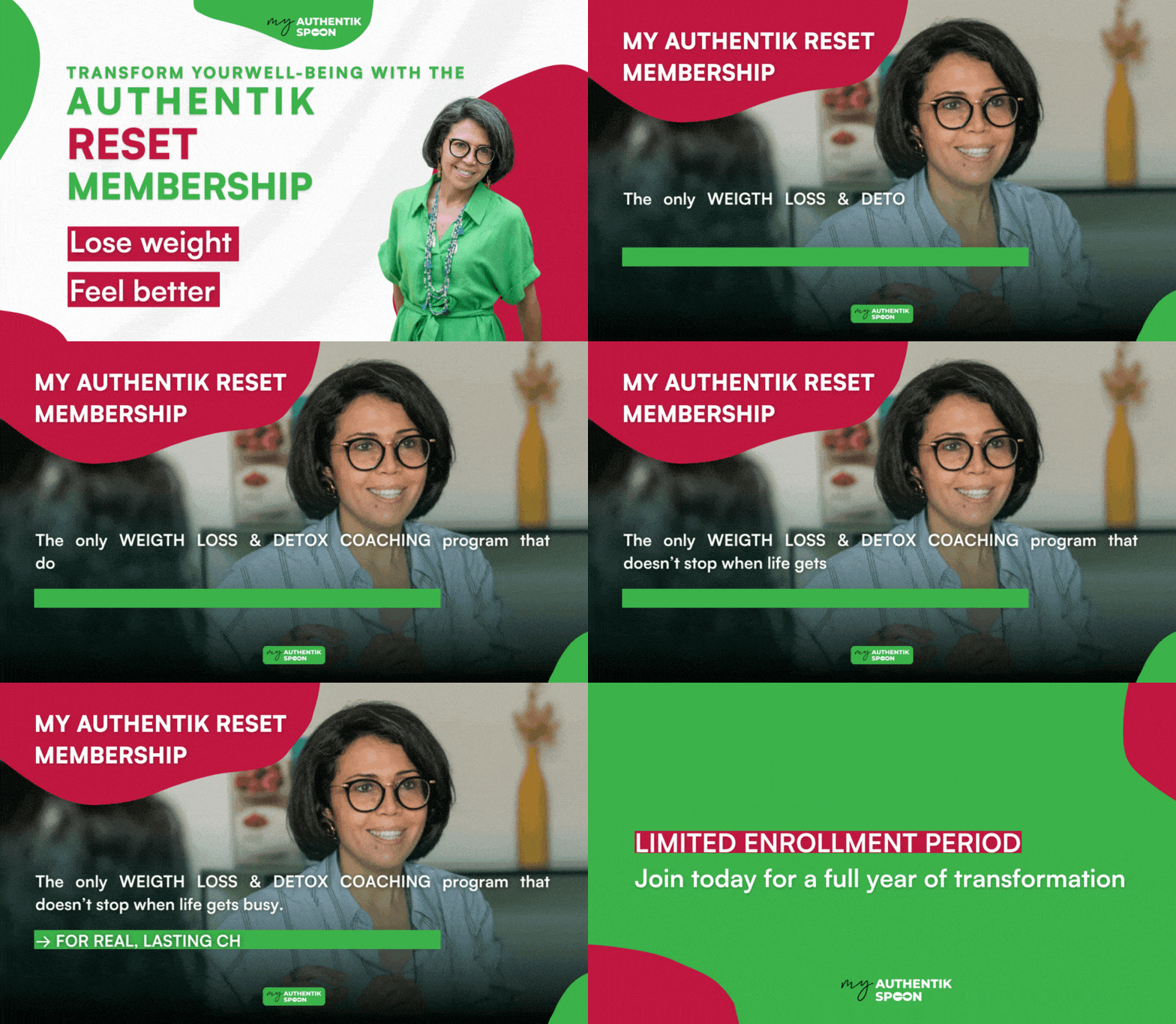
Unlock your healthiest life with the Authentik Reset Membership and experience structured support all year round.
Many people do not need another strict diet.
They need structure, support and a system they can return to when life gets busy.
That is why we created the Authentik Reset Membership.
It is a year-round program designed to help you lose weight, gain energy, reduce inflammation and build sustainable habits without extreme dieting.
Inside the membership:
- 4 guided Reset programs per year
- Detox and weight-loss coaching
- Private intake assessment
- One private naturopathic consultation per year
- Monthly Q&A calls
- Monthly workshops
- Recipe library and new weekly ideas
- Relaxing yoga practices
- Supportive private community
Rather than starting over again and again, members learn how to return to a supportive rhythm.
The membership is now open for a few days only.
Join before May 18th and receive 1 month free.
👉 Join the Authentik Reset Membership
Support stress and hormones with Marine’s Yoga Membership
Nutrition works better when the nervous system is supported too.
Marine’s Hormonal Balance Yoga Membership offers gentle, accessible yoga practices designed to reduce stress, improve sleep, support hormonal balance and help women feel more connected to their bodies.

Inside the membership:
- One live yoga class every week
- Unlimited replay access
- A growing library of classes
- Gentle practices for stress, sleep and hormones
- Private WhatsApp community
- 10-day free trial
This is especially helpful for women navigating stress, fatigue, poor sleep, perimenopause, menopause or emotional overload.
Marine’s Yoga Membership is also available with 10 days free trial.
👉 Start Your Free Trial – Join Marine’s Hormonal Balance Yoga Membership
Why consistency matters more than perfection
Many people approach health in an “all or nothing” way.
They follow a plan perfectly for a few days or weeks, then feel discouraged the moment life becomes busy or imperfect.
But real progress is rarely built through perfection.
It is usually built through repeated small actions that continue even during stressful or messy seasons of life.
A simple homemade meal.
A short walk after dinner.
Going to bed earlier.
Taking a few minutes to slow down before eating.
These habits may seem small, but repeated consistently over time, they often create far more lasting change than extreme short-term efforts.
This is also why flexibility matters.
A realistic routine should be able to survive holidays, travel, celebrations, stressful work periods and family life.
Health is not built in one perfect week.
It is built in the ability to return to supportive habits again and again.
The connection between food and emotional wellbeing
Food is never only physical.
Meals are connected to comfort, memories, culture, stress, celebration and routine.
This is one reason rigid plans can feel emotionally exhausting over time.
When eating becomes too controlled, many people start feeling disconnected from hunger, fullness and enjoyment.
A healthier relationship with food often comes from learning how to combine nourishment and satisfaction instead of constantly choosing between them.
Balanced meals, enjoyable recipes and calmer eating environments can help reduce the feeling of constantly “fighting” with food.
This creates a more peaceful and sustainable experience around eating.

Why sleep changes everything
Sleep influences nearly every system in the body.
Just a few nights of poor sleep can affect:
- hunger signals
- mood
- focus
- energy
- food choices
- recovery
- emotional resilience
Many people notice stronger cravings and lower motivation after poor sleep.
This is not simply a discipline issue.
The body is trying to compensate for fatigue by searching for quick energy and comfort.
Simple improvements in sleep hygiene can make a meaningful difference:
- reducing screen exposure at night
- eating earlier dinners
- limiting caffeine late in the day
- creating a calmer evening routine
- getting morning sunlight exposure
Better sleep often improves decision-making naturally because the nervous system feels more regulated.
The importance of muscle for healthy aging
Muscle is often discussed only in fitness culture, but it plays a much bigger role in long-term health.
Maintaining muscle supports:
- energy
- mobility
- balance
- blood sugar regulation
- resilience
- recovery
- healthy aging

This becomes increasingly important with age, especially for women navigating hormonal changes.
Building muscle does not require extreme workouts.
Simple resistance training, walking, yoga and regular movement can all contribute to maintaining strength over time.
The goal is not perfection or performance.
It is supporting a body that feels capable, energized and functional for years to come.
FAQ
Why do most weight-loss programs fail?
Most weight-loss programs fail because they focus on short-term restriction instead of long-term habits, stress, gut health, inflammation, hormones and maintenance.
How can I lose weight sustainably?
It will usually come from balanced meals, protein, fiber, regular movement, better sleep, stress reduction and long-term support.
Can inflammation affect weight-loss?
Yes. Chronic inflammation can affect energy, insulin sensitivity, cravings, hormones and metabolism, making it harder to lose weight.
Does gut health affect weight-loss?
Gut health can influence digestion, cravings, inflammation, energy and appetite regulation, all of which can affect weight-loss.
Is detox useful for weight-loss?
A nourishing detox can help support digestion, reduce bloating, improve energy and reset habits. Extreme detoxes are not necessary and are often not sustainable.
Can yoga help with weight-loss?
Yoga can support weight-loss indirectly by reducing stress, improving sleep, supporting hormone balance and helping regulate the nervous system.
What is the best diet for weight-loss?
The best diet is one that supports blood sugar balance, includes enough protein and fiber, reduces ultra-processed foods, supports gut health and can be maintained long term.
Final thoughts
Most people do not fail because they lack willpower.
They fail because the plan was not built for real life.
A better weight-loss approach supports the body instead of fighting it. It helps reduce inflammation, improve gut health, balance hormones, gain energy and build habits that can last.
Real progress does not come from doing everything perfectly.
It comes from learning how to return to your rhythm again and again.
Let’s continue learning & growing together!
• Explore our blog for naturopathic recipes and wellness advice.
• Sign up for our newsletter to receive exclusive health content straight to your inbox.
• Share your thoughts and comments on social media and tag us with #myauthentikspoon
About the author

Asmaa Lahlou is the co-founder of MyAuthentikSpoon, a naturopathic program dedicated to empowering individuals to make smarter food choices for improved well-being. If you’re ready to tackle wellness with a fresh perspective, schedule a complimentary private consultation with Asmaa to receive personalised dietary insights and weight management strategies. This is your opportunity to have your questions answered and to learn how to incorporate the food choices into your lifestyle and achieve a better wellbeing.

