


Granola has a healthy reputation.
After all, it often contains oats, nuts, seeds and dried fruit. But have you ever looked closely at what is actually in your breakfast bowl?
Not all granolas are created equal. Some are packed with added sugars and cereal flakes. Others offer a much better balance of protein, fibre and healthy fats. So what makes a truly healthy granola?
And here is something we often forget: it is not only about the granola itself. It is also about how much you eat, and what you pair it with.
This month is Blood Sugar Balance Month at MyAuthentikSpoon, so we are taking a closer look at one of the recipes from my book Eat to Lose Weight: our homemade, naturally sweetened granola. With a carefully balanced mix of gluten-free flakes, nuts and seeds, it gives you 8 g of protein and 5.5 g of fibre per 50 g serving.
But what makes this healthy granola different is not just its ingredients. It is the way we combined them, the quantities we chose, and how we recommend eating it as part of a complete breakfast.
Let’s compare it with conventional store-bought granola, and look at the simple changes that can make a real difference to your mornings.
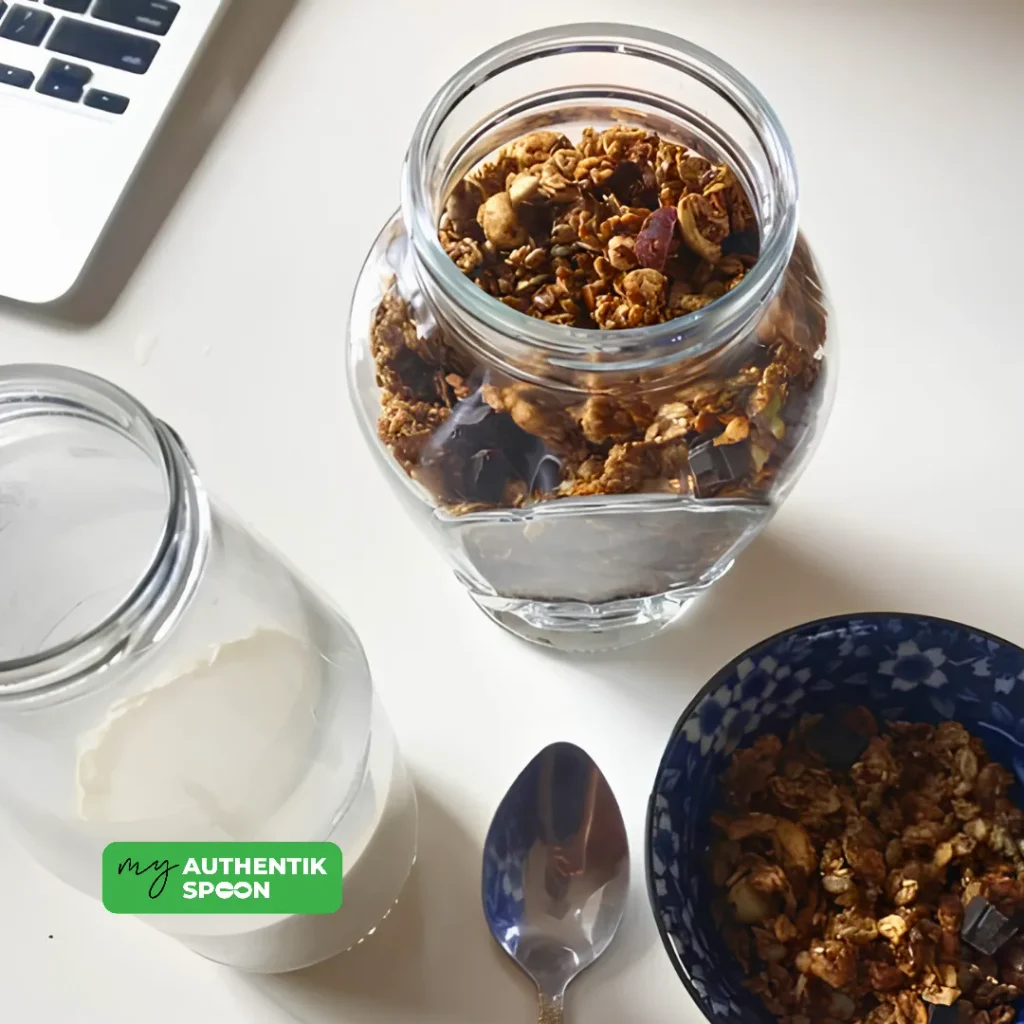
Is granola healthy? It depends on 3 things
Granola can be a nourishing breakfast. But whether it supports steady blood sugar depends on three things:
- What is in it: how much of it is cereal flakes versus nuts and seeds, and how much sweetener is added.
- How much you eat: granola is energy-dense, and it is easy to pour a big bowl.
- What you eat it with: sweetened milk and honey, or a protein-rich yogurt and fresh berries.
A healthy granola gets all three right. Let’s look at each one.

Healthy granola vs store-bought: side by side
For a fair comparison, “store-bought granola” here means a conventional, sweetened, cereal-heavy granola. Not every granola on the shelf fits this description. Some brands contain plenty of nuts, seeds and fibre, so the label is always worth reading.
| Conventional store-bought granola | MyAuthentikSpoon healthy granola | Why it matters for blood sugar | |
|---|---|---|---|
| Main ingredients | Mostly oats or other cereal flakes | Equal weights of gluten-free flakes, seeds and nuts | Half of the dry base is nuts and seeds, so less reliance on starchy cereals |
| Sweeteners | Sugar, honey or glucose syrup, sometimes in large amounts | A little maple or date syrup, less than a teaspoon per serving | Less added sugar, although syrups still raise blood glucose |
| Fats | Vegetable oils, coconut oil or other fats | Coconut oil and olive oil, plus the fats in nuts and seeds | Olive oil, nuts and seeds bring unsaturated fats |
| Protein | Often modest | 8 g per 50 g | A useful start, but a full breakfast needs more |
| Fibre | Depends on cereal and seed content | 5.5 g per 50 g | Fibre supports digestion and can help slow glucose absorption |
| Portion | Easy to pour a large bowl | A defined 50 g serving | Even a nutritious granola is energy-dense |
| How it is served | Often with milk, sometimes sweetened | With plain yogurt, kefir or a plant-based alternative | Plain, high-protein yogurt makes breakfast more balanced |
| Toppings | Dried fruit, chocolate or honey | Optional dried fruit or dark chocolate, or fresh berries | Fresh berries are a good choice when limiting added sugar |
Now let’s look at the 5 differences that matter most.
1. The 200:200:200 balance
This is the heart of our recipe, and what really sets it apart.
Most conventional granolas are built mainly on cereal flakes. Ours uses equal weights of three things: gluten-free grain flakes, seeds and nuts. So half of the dry base comes from nuts and seeds.
Why does that matter? Nuts and seeds bring protein, fibre, healthy fats, vitamins and minerals. Almonds and walnuts are rich in vitamin E, for example, and all nuts contain magnesium (Harvard Health). They also make the granola more filling, so a smaller portion goes further.
This balance says more about the recipe than simply calling it “sugar-free”. It is what makes it a healthy granola, and not just a sweet cereal with a better label.
2. Less than a teaspoon of syrup per serving
Many store-bought granolas use sugar, honey or glucose syrup to create those sweet, crunchy clusters. Sometimes a sweetener is one of the first ingredients on the list.
In our recipe, a small amount of maple or date syrup is spread across 13 portions. That works out at less than a teaspoon of syrup per serving.
I want to be clear on one point: maple and date syrup are still sugar. The World Health Organization counts the sugars in honey and syrups as “free sugars”, the kind we should limit. They still raise blood glucose. The difference is the quantity, and the fact that you are in control of it.
And if you want to go further, the book includes a variation for an even lower glycemic version.
If sugar cravings are part of your story, you may also like my article on the causes of sugar cravings.
3. More protein and fibre per 50 g
Here is how a 50 g serving of our healthy granola compares:
| Per 50 g | Conventional granola (typical values) | MyAuthentikSpoon healthy granola |
|---|---|---|
| Calories | about 196 kcal | 290 kcal |
| Protein | about 3.5 g | 8 g |
| Fibre | about 3.5 g | 5.5 g |
Let’s be honest about the calories. Our healthy granola contains more energy per serving, mainly because of all the nuts and seeds. So it is not a lower-calorie alternative, and I would never present it that way.
What you get in exchange is more than double the protein, and more fibre. Fibre supports digestion and helps slow down how quickly sugar reaches your blood (Harvard Health). Together with protein and healthy fats, it helps you stay full until lunch.
4. A defined portion
Granola is easy to overeat. It is crunchy, it is delicious, and the bowl fills up fast.
Even a healthy granola is energy-dense, so portion size really matters. That is why our recipe is built around a 50 g serving.
A simple tip: weigh your portion once, so you know what 40 to 50 g looks like in your favourite bowl. After that, you will not need the scale.
5. What you pair it with
This is where most of the difference happens.
The conventional breakfast
Granola with milk, sometimes with honey, dried fruit or a sweetened drink on the side.
Depending on the granola, the milk and the portion, this can easily become a breakfast that is mostly carbohydrates, with little protein.
The MyAuthentikSpoon approach
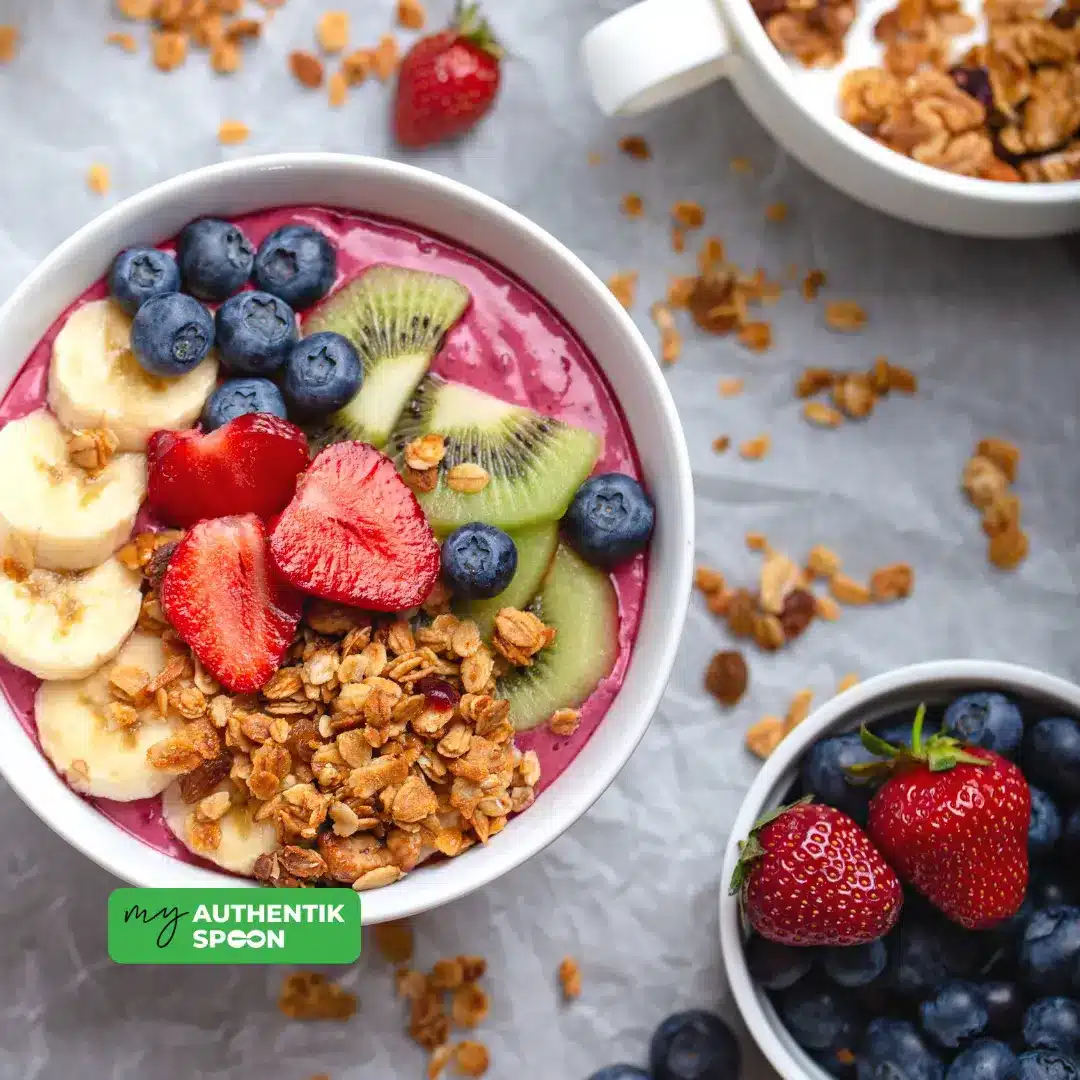
40 to 50 g of homemade healthy granola + 200 g of plain Greek yogurt or skyr + 75 g of fresh berries.
This brings together fibre-rich carbohydrates, protein, healthy fats and fruit in one balanced bowl. Protein matters here: in a 2024 study, a protein-rich meal led to a smaller rise in blood sugar than meals of the same calories built mostly on carbohydrates.
In the book, I recommend aiming for around 28 to 30 g of protein at breakfast. If you prefer coconut yogurt, which is much lower in protein, add a serving of protein powder to reach that.
Full-fat or low-fat yogurt?
You do not need to overthink this one. What matters most is that your yogurt is plain, unsweetened and rich in protein.
Full-fat Greek yogurt can be a satisfying choice if it suits you. But unsweetened lower-fat Greek yogurt or skyr works just as well as part of a balanced breakfast. Both can be high in protein.
For more ideas on starting the day well, try my high protein breakfast smoothie. And a short walk after breakfast helps too, as I explain in mindful movement and food.
How to choose a healthy granola at the supermarket
Not ready to make your own? The label can help you spot a healthy granola:
- Read the first ingredients. If sugar, honey or syrup appears near the top, it is closer to a sweet cereal.
- Compare per 100 g, not per serving. Serving sizes vary a lot between brands.
- Look for nuts and seeds high on the list. A healthy granola gets much of its crunch from them, not just from sugar-coated flakes.
- Check protein and fibre. Higher numbers usually mean a more filling granola.
- Watch for several sweeteners. Cane sugar, honey, glucose syrup and rice syrup can all appear in the same pack.
- Turn the pack over. Words like “natural” or “with honey” on the front do not tell you how much sugar is inside.
Want the full recipe?
The complete recipe for our homemade healthy granola is in my book Eat to Lose Weight: the exact quantities, the spices, the baking method and the lower glycemic variation.
One batch keeps for 4 to 6 weeks in an airtight container, so it covers many breakfasts. It is a family favourite in our home, and it is one of over 85 recipes in the book, all built on the same balanced approach.
Allergy note: this granola contains nuts, and sesame seeds if used.
Ready to take the next step?
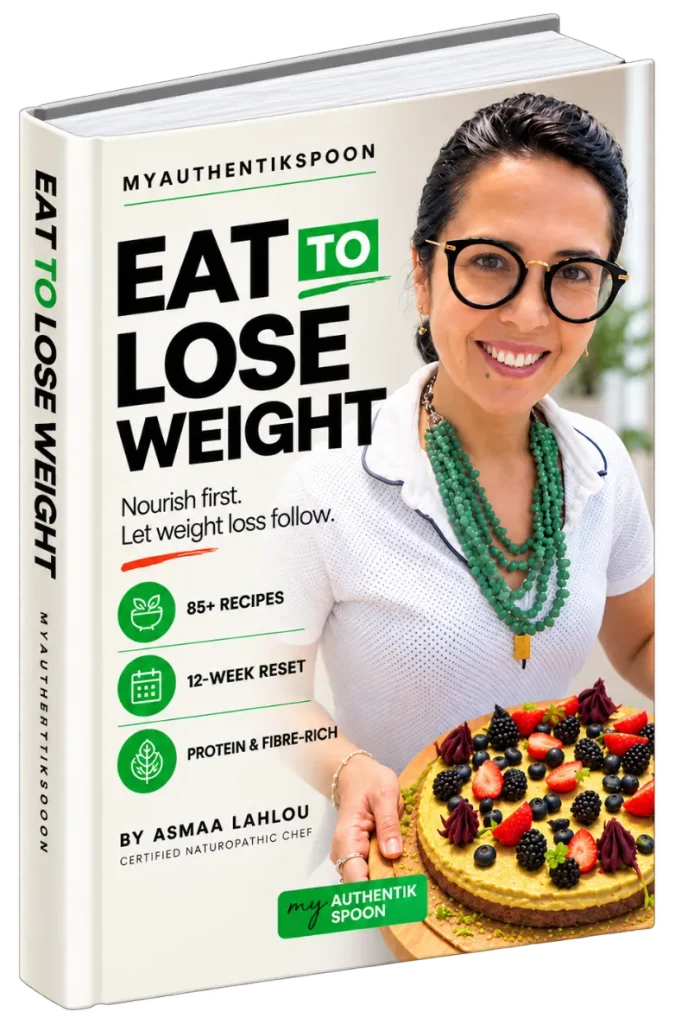
Get your copy of Eat to Lose Weight
I collected my whole methodology in my new book: the PFF C framework (Protein, Fat, Fibre and Smart Carbs), the balanced plate, and over 85 recipes built to nourish first, so your body can let go of weight. No calorie counting, no quick fix.
More support for your blood sugar
- Mindful movement and food: 5 reasons your body needs both
- Diabetes and sugar
- Weight loss after 35
- Digestion after 35
Frequently asked questions
Is granola healthy?
It can be. A healthy granola is built on whole grains, nuts and seeds, with only a little added sweetener. Many conventional granolas are mostly cereal flakes and sugar, so it is worth reading the label.
Is homemade granola healthier than store-bought?
Often, yes, because you control the ingredients, the amount of sweetener and the balance of flakes, nuts and seeds. Some store-bought brands are well made too, so compare labels.
Does granola raise blood sugar?
Granola contains carbohydrates, so it will raise blood sugar. How much depends on its ingredients, the portion and what you eat it with. Pairing it with plain, protein-rich yogurt makes a more balanced breakfast.
Are maple syrup and date syrup better than sugar?
They are still sugars. The World Health Organization counts sugars in honey and syrups as free sugars, which we should limit. The key is to use small amounts.
How much granola should I eat?
Our recipe is built around a 50 g serving. For many people, 40 to 50 g is enough when it is part of a complete breakfast with yogurt and fruit.
What is the best thing to eat with granola?
Plain Greek yogurt or skyr with fresh berries. This adds protein and fruit, and turns granola into a more balanced breakfast.
Is granola good for weight loss?
Granola is energy-dense, so portion size matters. A healthy granola in a measured portion, served with protein-rich yogurt, can fit well into a balanced eating plan.
How long does homemade granola keep?
Our homemade granola keeps for 4 to 6 weeks in an airtight container.
Liked this article and want personal support?
If you are ready to take serious action and want the right type of support to reach your goal, I would love to hear from you. Book a call with me to discuss your personal situation, and I will advise you on the best solution for you.
This article is for general information and does not replace medical advice. Please speak to your doctor about your personal situation, especially if you have diabetes or take medication.
Let’s continue learning & growing together!
We hope this recipe brings ease and nourishment to your summer table. To continue your wellness journey, we invite you to:
• Explore our blog for naturopathic recipes and wellness advice.
• Sign up for our newsletter to receive exclusive health content straight to your inbox.
• Share your thoughts and comments on social media and tag us with #myauthentikspoon
About the author

Asmaa Lahlou is the co-founder of MyAuthentikSpoon, a naturopathic program dedicated to empowering individuals to make smarter food choices for improved well-being. If you’re ready to tackle wellness with a fresh perspective, schedule a complimentary private consultation with Asmaa to receive personalised dietary insights and weight management strategies. This is your opportunity to have your questions answered and to learn how to incorporate the food choices into your lifestyle and achieve a better wellbeing.

