

These gluten free crackers are incredibly simple healthy snacks to make, and they are so much more flavourful than anything you can buy on store shelves. One tray, a handful of seeds, good olive oil, and you have a jar of crunch for the whole week.
I started making them because I kept reading the labels of packaged crackers. Many are built on refined flour and starch, with a sprinkle of seeds on top for show. I wanted the opposite: a cracker where the seeds are the base, not the decoration.
These superseeded gluten free homemade crackers are rich in fibre and healthy fats, so they keep you satisfied for longer. Serve them with hummus or your favourite dip, or break them over a salad for a super crunchy effect.
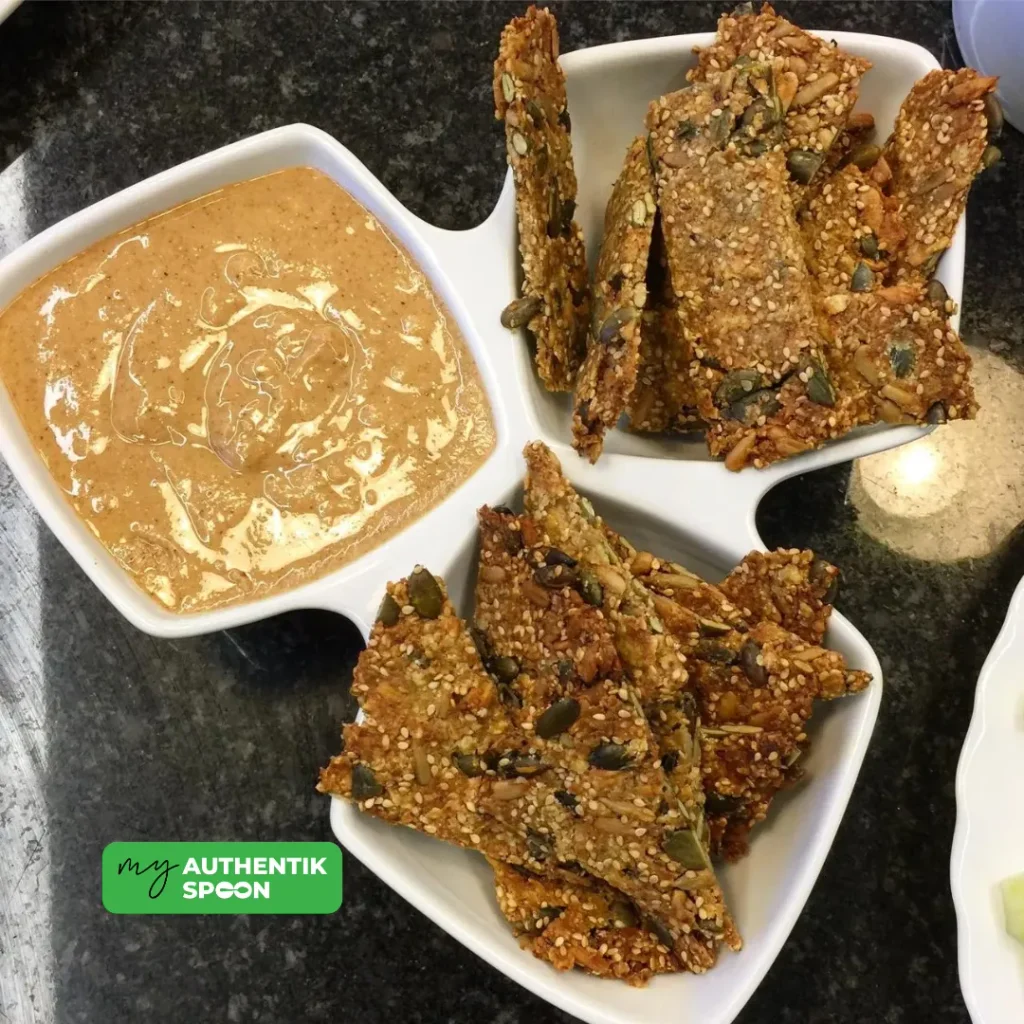
Why make your own gluten free crackers
Store-bought gluten free “healthy crackers” solve one problem: they remove the gluten. But removing gluten does not automatically make a snack nourishing. Many packaged versions replace wheat with refined rice flour, corn starch or tapioca, which are low in fibre and protein.
When you make gluten free crackers at home, you decide what goes in. Here, almost a third of the dough is seeds. The rest is whole grain oats, a gluten-free wholegrain flour mix, and a little psyllium to hold it all together. No additives, no hidden sugar, no seed oil blends.
And they taste better. Toasted sesame, nutty pumpkin seeds, a hint of orange and oregano. People who try them at my table always ask for the recipe.

5 reasons these gluten free crackers are worth making
1. Seeds are the base, not the topping
Each batch uses 120g of sesame, pumpkin and sunflower seeds, plus flax and chia. Pumpkin, sunflower and sesame seeds bring plant protein, healthy fats and minerals such as magnesium and zinc. This is what makes these gluten free crackers so crunchy and so filling.
2. Fibre and healthy fats that keep you satisfied
One 30g serving gives you around 3g of fibre. Flax, chia, psyllium and oats all contribute. Fibre slows digestion, and Harvard Health explains that it also helps slow the rise in blood sugar after a meal.
Pair that high fibre snack with healthy fats from the seeds and olive oil, and you get a snack that feels steady, not one that leaves you hungry an hour later.
3. Plant omega-3s from flax and chia
Ground flaxseed and chia seeds are two of the best plant sources of ALA, a type of omega-3 fat, according to the NIH Office of Dietary Supplements. Your body cannot make omega-3s on its own, so food sources matter.
4. No eggs, no gums, no refined starch
When flax, chia and psyllium soak in liquid, they form a thick gel. That gel binds the dough, so these gluten free crackers need no eggs, no xanthan gum and no starch to hold together. Psyllium husk is also a well-known soluble fibre.
5. Made with extra virgin olive oil
I use 75ml of cold-pressed extra virgin olive oil. It is a source of monounsaturated fats and polyphenols, and the heart of the Mediterranean way of eating. It also gives the crackers a rich, golden finish.
The gluten free crackers recipe
Makes 1 to 2 trays, about 15 servings of 30g Per 30g serving: about 150 kcal, 4g protein, 3g fibre
Prep time: 30 minutes (including 10 to 15 minutes for the seeds to gel) Cook time: 25 to 35 minutes Total time: about 1 hour, plus cooling
Ingredients
Wet
- 1/2 orange, juiced (about 3 tbsp)
- 75ml extra virgin olive oil, cold pressed
- 200ml filtered water
- 30g ground flaxseed
- 30g chia seeds
- 5g (1 tsp) psyllium husk
Dry
- 60g organic oat flour, certified gluten-free
- 60g organic oat flakes, certified gluten-free (or buckwheat or quinoa flakes)
- 60g gluten-free wholegrain flour (ideally a homemade mix of 20g each brown rice, sorghum and buckwheat flour)
- 120g seeds (40g each sesame, pumpkin and sunflower seeds)
- 1 tbsp dried oregano (I also love them with za’atar)
- 1 tsp unrefined salt
Allergy note: contains sesame. Swap it for extra pumpkin or sunflower seeds, or another seed you tolerate.
Instructions
- Preheat the oven to 160°C and line a baking tray with parchment paper.
- In a medium bowl, whisk together the orange juice, olive oil and water. Add the flax, chia and psyllium and mix well. Let it gel for 10 to 15 minutes.
- In the meantime, mix the rest of the dry ingredients together in a large bowl.
- Combine the wet and dry ingredients and set aside for 5 minutes. It should have the consistency of a thick porridge.
- Divide the dough in two. Using a spatula, press half the dough thinly onto the parchment paper, or roll it out between two sheets of parchment paper, into a thin, even layer about 3mm thick.
- Using a knife or a pizza cutter, score cracker shapes into the dough.
- Repeat with the other half of the dough.
- Bake for 25 to 35 minutes, until golden and starting to crisp. Baking time depends on the thickness of your crackers. If the edges brown faster, remove those pieces and return the softer crackers to the oven.
- Cool completely on a wire rack. The crackers get crispier as they cool. Break them along the scored lines and store in an airtight container once fully cooled.
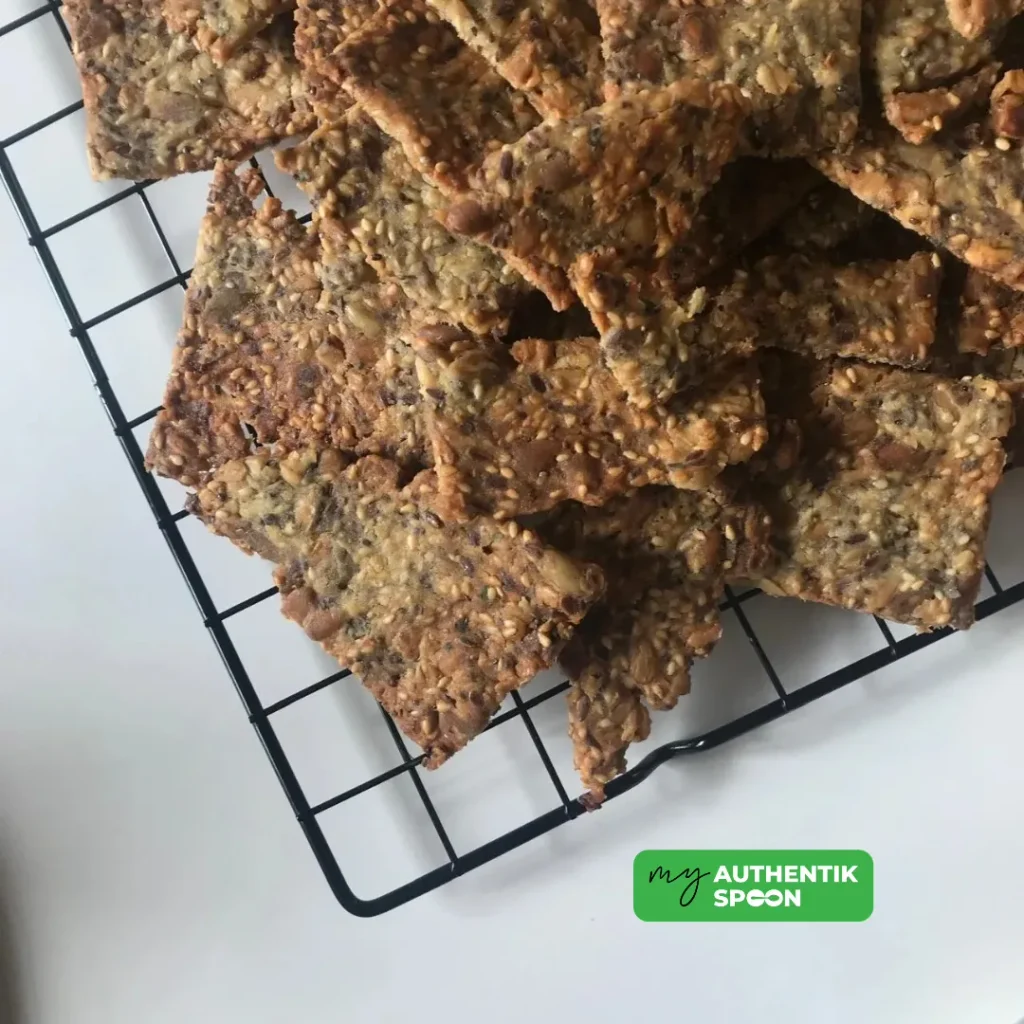
Tips for the crispiest gluten free crackers
- Thin is the key to crunch. The thinner and more even the layer, the crispier your gluten free crackers will be. Thicker ones stay chewy in the middle.
- Rolling between two sheets of parchment is the easiest way to get an even layer without the dough sticking.
- Score before baking. Once baked, the crackers break cleanly along the lines.
- Let them cool fully before you judge the texture. They crisp up a lot on the rack.
- Flavour swaps: za’atar instead of oregano, rosemary and black pepper, or cumin with a pinch of chilli.
- Seed swaps: any mix of seeds works, as long as the total stays at 120g.
- Storage: they keep about a week in an airtight jar. If they soften, crisp them for 5 minutes at 150°C.
7 easy ways to serve your gluten free crackers
Here is where these crackers really shine. On their own they give you about 4g of protein per serving, so I like to pair them with something that adds more protein or more plants.
- With hummus. The classic, and an easy way to add plant protein. Try it with my kimchi hummus for a gut-friendly twist.
- With a nut butter or tahini dip. Creamy, rich and very satisfying.
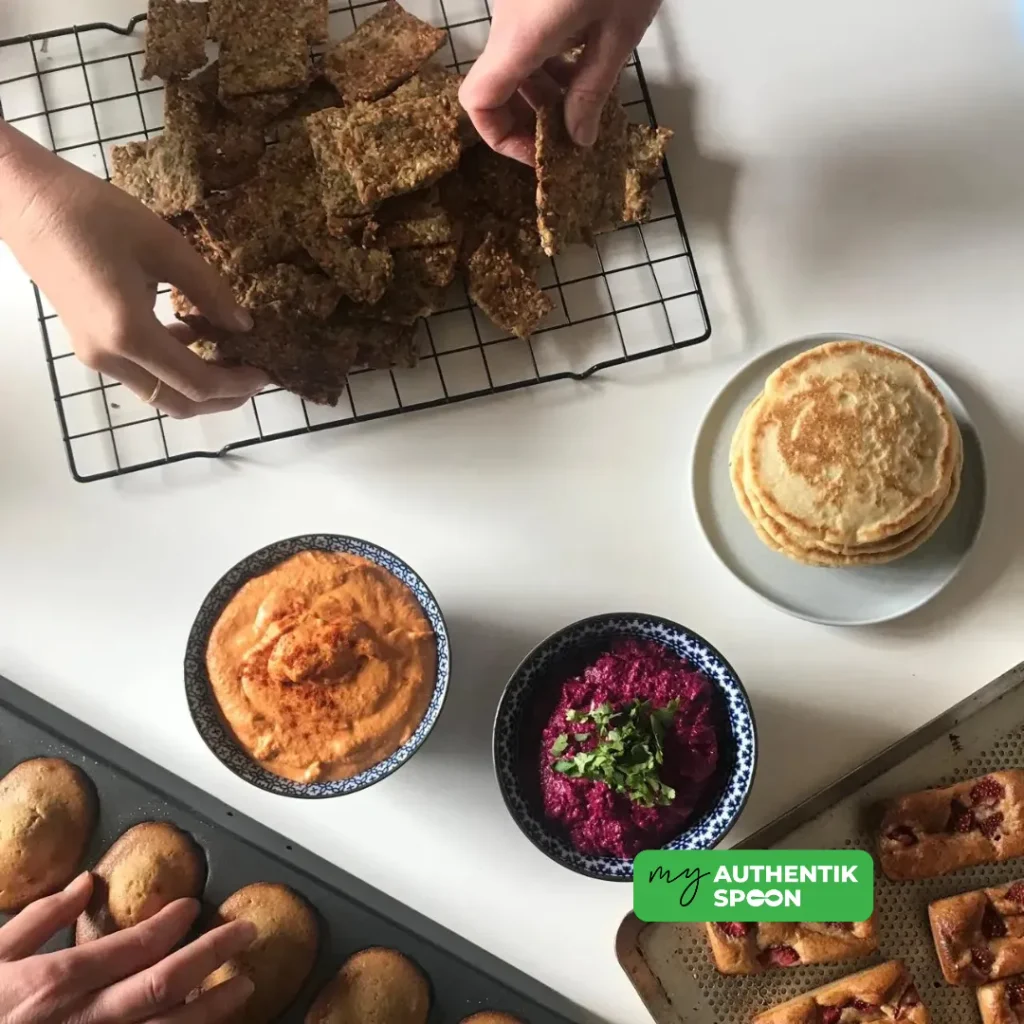
- With roasted vegetable dips. A roasted red pepper dip or a bright beetroot dip makes a colourful sharing plate.
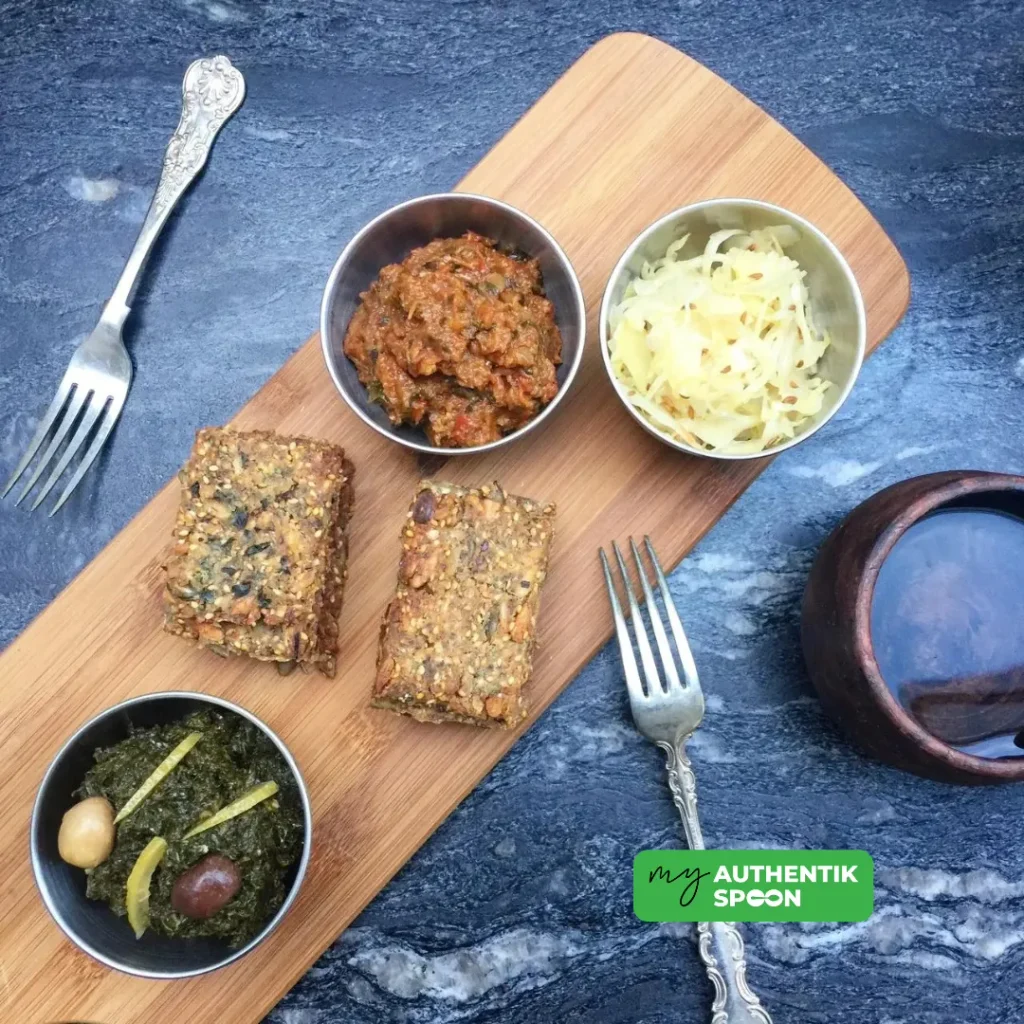
- With fermented vegetables. Sauerkraut, a cooked tomato and aubergine salad, or sautéed greens with olives and preserved lemon. Crunchy, tangy and full of flavour.
- Crumbled over a salad. Use them like croutons for a super crunchy effect.
- With a bowl of soup. Perfect now that those cooler winter evenings.
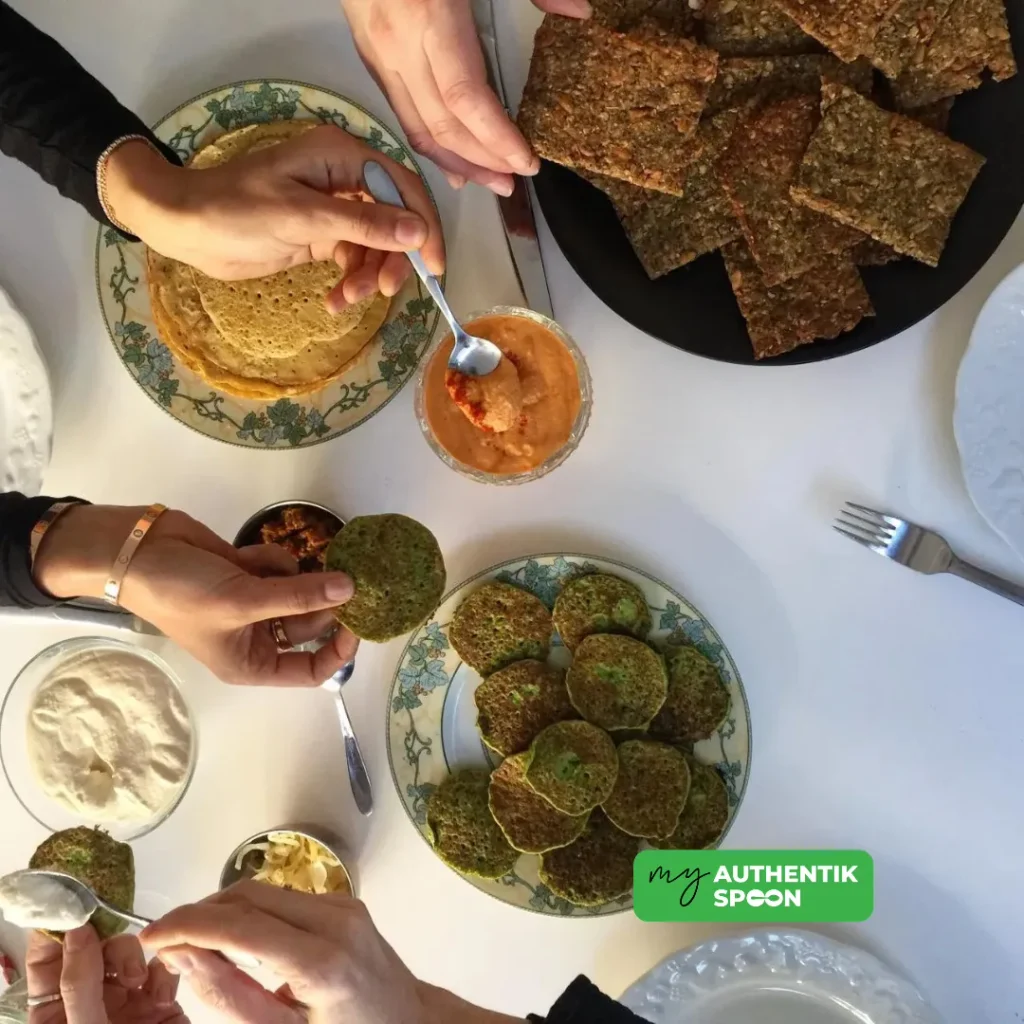
- On a sharing table. Next to pancakes, flatbreads and a few dips, they always disappear first.
Are oats gluten free?
Oats are naturally gluten free, but they are often grown and processed alongside wheat, barley and rye, so regular oats can be contaminated. That is why this recipe uses certified gluten-free oat flour and oat flakes.
A small number of people with coeliac disease also react to pure, uncontaminated oats (NHS guidance). If that is you, use buckwheat or quinoa flakes instead of the oat flakes, and replace the oat flour with more of the gluten-free flour mix.
Love recipes like this? They are the heart of my book
If you enjoy simple, real-food recipes like these gluten free crackers, you will love Eat to Lose Weight: My 12-Week Method & 85+ Recipes.
Inside, you will find the PFF+C Plate Method I use to build every meal, a structured 12-week plan in three phases, and practical tools like a habit tracker, a shopping guide and tips for eating out. Every recipe uses ingredients you can find in a regular supermarket.
It is not a calorie-counting plan or a quick fix. It is built around nourishment first, and food you actually want to eat.
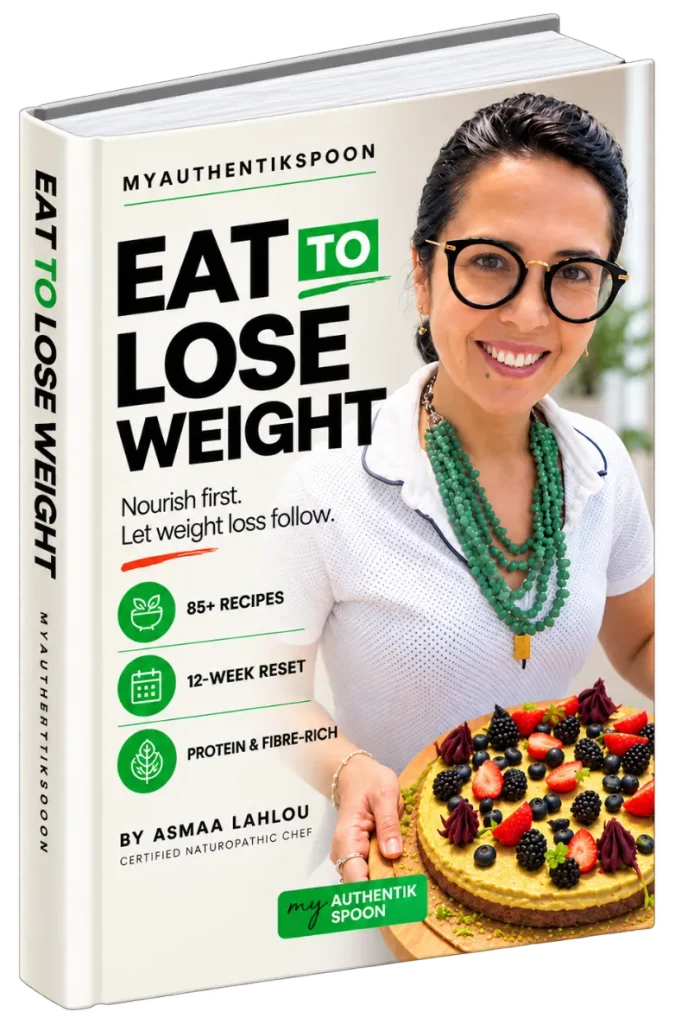
For a limited time, the book is 50% off: AED 75 instead of AED 150.
Frequently asked questions
Are these gluten free crackers healthy?
They are made from whole food ingredients: seeds, oats, a wholegrain gluten-free flour mix and extra virgin olive oil. Each 30g serving gives about 4g of protein and 3g of fibre, with no refined sugar or additives. Like any snack, portion size still matters.
Are oats gluten free?
Oats are naturally gluten free but often contaminated with wheat during growing and processing. Always choose oats labelled certified gluten-free. A small number of people with coeliac disease also react to pure oats, so check with your doctor or dietitian if you are unsure.
Can I make these crackers without oats?
Yes. Use buckwheat or quinoa flakes instead of the oat flakes, and replace the oat flour with more of the gluten-free flour mix.
What can I use instead of psyllium husk?
Psyllium helps bind the dough. You can leave it out and add an extra tablespoon of ground flaxseed or chia, but the crackers may be a little more fragile.
Why are my crackers not crispy?
They are usually too thick, or not baked long enough. Roll the dough to about 3mm, bake until golden, and let them cool completely on a wire rack, since they crisp up as they cool.
How long do homemade gluten free crackers last?
About a week in an airtight container at room temperature. If they soften, crisp them in the oven for 5 minutes at 150°C.
Are these vegan crackers?
Yes. There are no eggs or dairy. The flax, chia and psyllium gel does the binding.
Can I make them nut free?
Yes, this recipe contains no nuts. It does contain sesame, which you can replace with more pumpkin or sunflower seeds.
How much protein is in these crackers?
About 4g per 30g serving. Serve them with hummus, a bean dip or a nut butter to make the snack more filling.
Can I freeze them?
Yes. Freeze them in an airtight bag, then re-crisp in the oven for a few minutes before serving.
Let’s continue learning & growing together!
We hope this recipe brings ease and nourishment to your table. To continue your wellness journey, we invite you to:
• Explore our blog for naturopathic recipes and wellness advice.
• Sign up for our newsletter to receive exclusive health content straight to your inbox.
• Share your thoughts and comments on social media and tag us with #myauthentikspoon
About the author

Asmaa Lahlou is the co-founder of MyAuthentikSpoon, a naturopathic program dedicated to empowering individuals to make smarter food choices for improved well-being. If you’re ready to tackle wellness with a fresh perspective, schedule a complimentary private consultation with Asmaa to receive personalised dietary insights and weight management strategies. This is your opportunity to have your questions answered and to learn how to incorporate the food choices into your lifestyle and achieve a better wellbeing.

