

Stress and weight loss are deeply connected after 35, even when you feel like you are doing everything right.
Last week on the blog, we explored inflammation, not as a diagnosis, but as a signal. A signal that, after 35, the body needs a different kind of support to lose weight, regain energy, and feel balanced again.
If you missed it, you can read it here:
👉 Why weight loss after 35 feels harder and what finally works
That article helped many women understand why food quality, recovery, and inflammation matter more at this stage of life. But for many, a question remained:
If I’m eating better and taking care of myself, why do I still feel stuck?
Very often, the answer is stress.
Not dramatic stress.
Not burnout that forces you to stop.
But quiet, constant stress that keeps the body in survival mode.
How stress and weight loss are directly connected after 35

Lowering inflammation is essential after 35, but for many women, it is not enough on its own. Stress and inflammation feed each other. You can eat anti-inflammatory foods, support gut health, and balance fats, yet still struggle with weight loss if stress remains high.
This is where chronic stress starts to interfere with the body’s ability to lose weight.
After 35, stress tends to feel heavier, last longer, recover more slowly, and impact hormones more strongly. When this happens, the body often responds by holding on rather than letting go.
Stress is not just mental
When we talk about stress, most people think about the mind. But the body does not separate stress in that way.
It experiences stress through mental load, emotional pressure, lack of sleep, blood sugar swings, intense or poorly recovered exercise, constant decision-making, and repeated dieting attempts. All of these activate the same stress response.
Over time, this becomes chronic stress, even when life looks “normal” from the outside.

access to a weight loss free apps training and many more features & wellness programs.
Cortisol: the hormone that keeps the body on hold
Cortisol is often blamed, but rarely explained clearly. It is a survival hormone that helps you wake up, focus, and respond. The problem is not cortisol itself, but cortisol that stays elevated for too long.
When cortisol remains high, fat burning slows, belly fat storage increases, cravings intensify, sleep quality drops, and inflammation rises again. This is why stress-related belly fat is so common after 35.
It is not because you eat too much. It is because your body is trying to protect itself.
This link between stress hormones and metabolism is one of the most misunderstood aspects of weight loss after 35.
Why stress pushes the body toward emotional eating
Under stress, the nervous system looks for relief. Food becomes a tool, not a problem.
This is how emotional eating linked to stress often shows up: stronger sugar cravings, evening snacking, feeling disconnected from hunger signals, and guilt around food choices.
This is not a discipline issue. It is a nervous system regulation issue.
Until the nervous system feels safe, the body resists letting go of weight.
When exercise adds stress instead of relieving it

Movement is essential for health and weight loss, but after 35, how you move matters more than how much you move.
Exercise becomes stressful when intensity is high but recovery is low, sleep is already poor, food intake is insufficient, or overall stress levels are elevated. In those cases, the body reads exercise as another threat.
This is why some women notice more fatigue, stronger cravings, stalled weight loss, and increased inflammation, even though they are exercising regularly. At this stage, gentler and more supportive movement often works better for fat loss and hormonal balance at this stage.
Supplements: helpful, but not the foundation
I am often asked about ashwagandha, magnesium, and adrenal support supplements. They can help, but they are not the foundation.
Magnesium supports relaxation, sleep, and nervous system balance. Ashwagandha may help regulate cortisol for some people. However, supplements do not replace regular meals, stable blood sugar, proper recovery, or stress regulation habits.
They support the system, but they do not reset it on their own.
What actually helps the body let go after 35
From my experience as a naturopathic chef, real change happens when women stop pushing and start supporting their body.
What works consistently includes regular meals to calm the stress response, enough protein and healthy fats, reducing inflammation first and then stress, walking and gentle strength work, yoga, better sleep rhythm, and fewer rules with more consistency.
When stress lowers, inflammation stays lower. When cortisol calms, the body becomes more responsive again.
Why the 5-Day Body Reset focuses on stress, not willpower
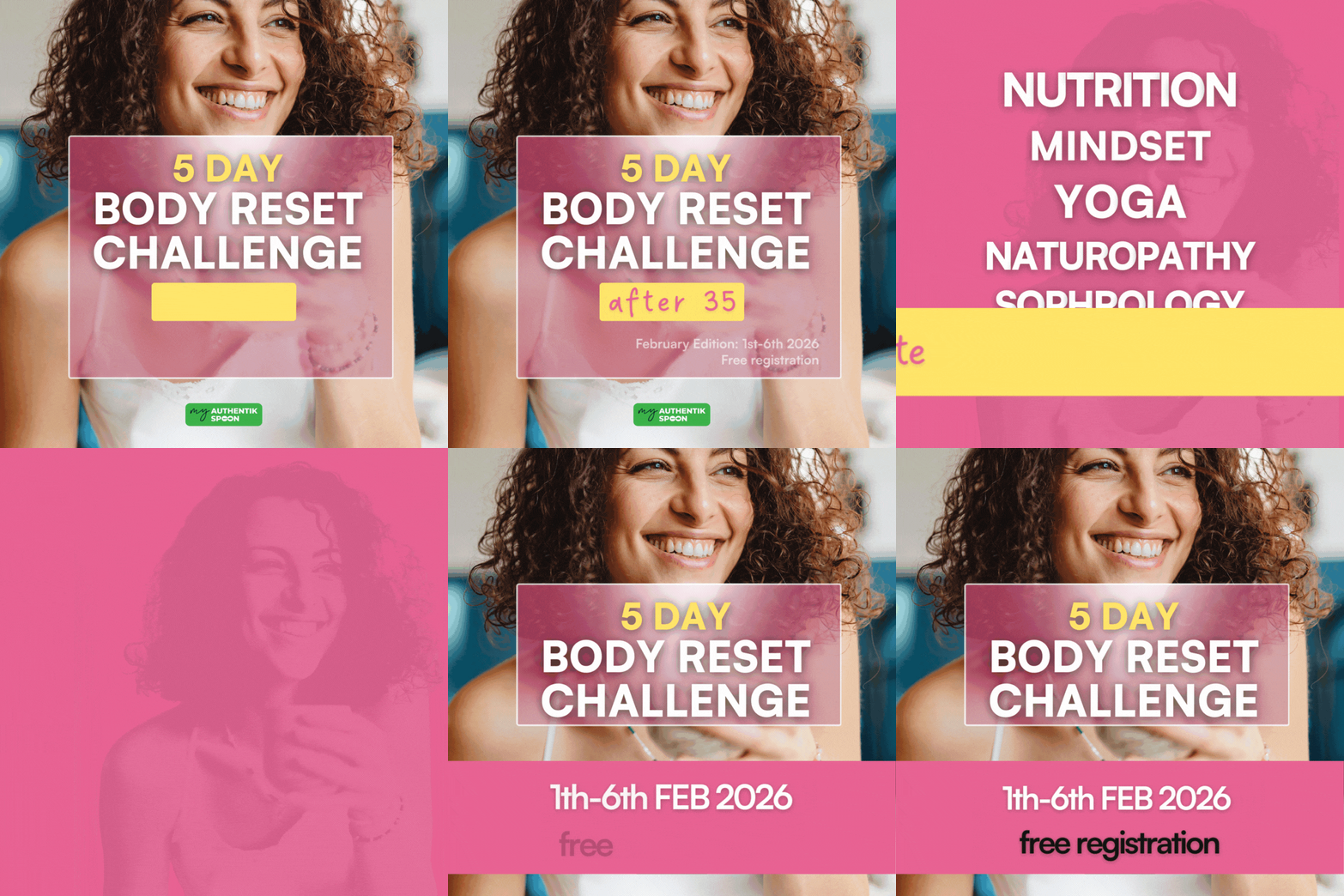
Ready to support your body at this stage of life? Join our FREE 5-Day Body Reset Challenge – 1-6 Feb 2026 and start the year feeling lighter, more energized, and more in tune with your body in just 5 days.
This is exactly why our Free 5-Day Body Reset Challenge, February Edition (Feb 1–6, 2026), is built the way it is.
It is not designed to push harder, but to reset rhythm.
Inside the challenge, we focus on stress and cortisol, inflammation and gut health, energy and digestion, supportive movement, and realistic habits for women over 35.
👉 Sign up for the 5-Day Body Reset Challenge (Feb 1-26)
Join our Free 5-Day Body Reset Challenge – February Edition
📅 Feb 1–6, 2026
Inside the challenge, we focus on:
- common challenges women face in their mid-30s and beyond
- stress and cortisol
- energy and digestion
- inflammation and gut health
- simple, sustainable habits
- expert-led daily support
👉 Register for the free challenge here
Ongoing support: calming the nervous system long-term

Stress regulation is not a one-time fix. This is why we also created the Hormonal Balance Yoga Membership with Marine Baaklini.
Designed for women over 35, it helps calm the nervous system, improve sleep, support hormone balance, and reduce stress gently. You can explore it with a 10-day free trial.
Sometimes, weight loss does not start by doing more, but by allowing the body to finally exhale.
👉 Start your 10-day Yoga membership free trial
Final thoughts: the missing layer after 35
Inflammation explains part of the story. Stress explains what keeps it going.
When both are addressed, metabolism responds, hormones stabilise, energy returns, and the body can finally let go again.
Not fast, but sustainable.
And that is what truly works after 35.
Let’s continue learning & growing together!
• Explore our blog for naturopathic recipes and wellness advice.
• Sign up for our newsletter to receive exclusive health content straight to your inbox.
• Share your thoughts and comments on social media and tag us with #myauthentikspoon
About the author

Asmaa Lahlou is the co-founder of MyAuthentikSpoon, a naturopathic program dedicated to empowering individuals to make smarter food choices for improved well-being. If you’re ready to tackle wellness with a fresh perspective, schedule a complimentary private consultation with Asmaa to receive personalised dietary insights and weight management strategies. This is your opportunity to have your questions answered and to learn how to incorporate the food choices into your lifestyle and achieve a better wellbeing.

